Guide
Normal wear and tear vs damage: a room-by-room guide for rentals
How operators commonly tell everyday wear from damage and from cleaning, with room-by-room examples, illustrated move-in and move-out pairs, and how to document each call.
Reviewed by Mark Shvaya, licensed California real estate broker (DRE #02243502), who uses ProFlow360 in a rental portfolio Mark manages
Last reviewed
 MI · Jul 12, 2024
 MO · Sep 30, 2026
On this page
Short answer
Normal wear and tear is the deterioration that comes from ordinary, everyday use of a home over time, such as traffic wear on carpet or light scuffs on walls. Damage is harm beyond ordinary use, such as burns, holes or broken fixtures. Cleaning is a third category. The exact definitions come from state law, which varies.
What is normal wear and tear?
Normal (or ordinary) wear and tear is the decline in condition that happens because people live in a home: carpet flattens in walkways, paint fades where the sun hits it, door handles loosen. It is expected, and it happens even to careful residents.
Damage is different in kind. It is harm that goes beyond ordinary use, usually sudden or specific: a burn, a gouge, a broken blind, a stain that will not come out. Cleaning sits apart from both. It covers soil or residue left behind that ordinary cleaning would remove.
State deposit statutes use these terms, and the details differ by state. California's, for example, is Civil Code §1950.5. The California Courts self-help guide describes the deduction categories it allows as cleaning back to the move-in level of cleanliness, repairing damage other than normal wear and tear caused by the tenant or guests, and, where the agreement includes it, restoring furniture. Read the statute for your own state before relying on any general guide, including this one. Our security deposit laws by state pages quote each statute verbatim.
How is normal wear and tear different from damage, room by room?
The table shows how operators commonly categorize conditions in each part of a home, and what to photograph so the call can be explained later. These are common categories, not rules; the facts of each case and your state's law decide.
| Area | Commonly normal wear and tear | Commonly damage | Commonly cleaning | What to photograph |
|---|---|---|---|---|
| Walls and paint | Light scuffs, minor fading, a few small picture-nail holes | Gouges, large holes, crayon or marker, unapproved paint colors | Grease or smoke film that washes off | Wide shot of each wall, close-up of any mark |
| Carpet | Traffic wear in walkways, flattening, slight fading | Burns, tears, large or set-in stains, pet damage | Surface soil that comes out with normal cleaning | Doorway wide shot, each corner, traffic lanes |
| Hard floors | Light surface scratches, dulled finish | Deep gouges, water damage, chipped tile | Dirt, residue, sticky spots | Wide shot, then each damaged area |
| Kitchen counters and cabinets | Worn finish on handles and edges | Burns, cuts, broken hinges or doors | Grease, food residue, crumbs in drawers | Each counter run; inside cabinets |
| Appliances | Age-related wear with normal function | Broken shelves, dents, missing parts | Food left in the fridge, oven grease | Interior and exterior of each appliance |
| Bathroom tile and grout | Grout discoloration with age | Cracked or missing tile, mold from unreported leaks | Soap scum, hard-water film, hair | Tub surround, floor at the toilet, vanity |
| Fixtures and hardware | Loose door handles from use, worn finishes | Broken blinds, missing fixtures, damaged screens | Dusty fixtures and fans | Every fixture on the checklist |
| Yard and exterior | Seasonal lawn wear | Oil stains, dead landscaping the lease made the resident responsible for | Trash and debris left behind | Front, back, garage, side yards |
What do wear, damage and cleaning look like in photos?
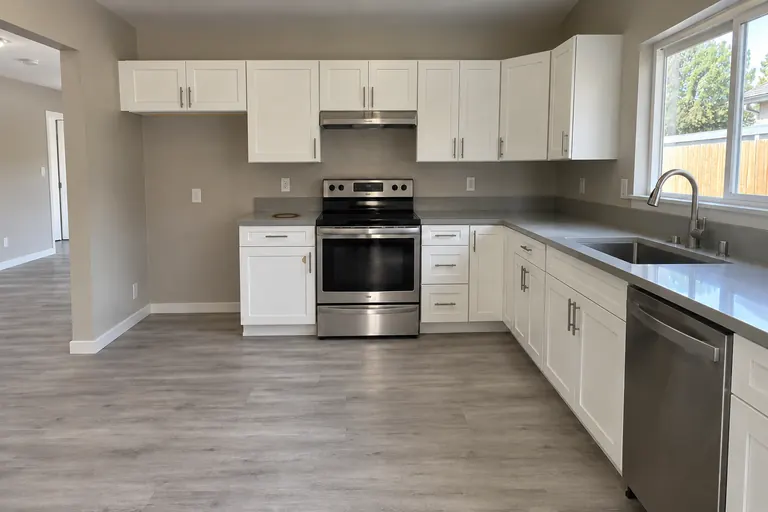
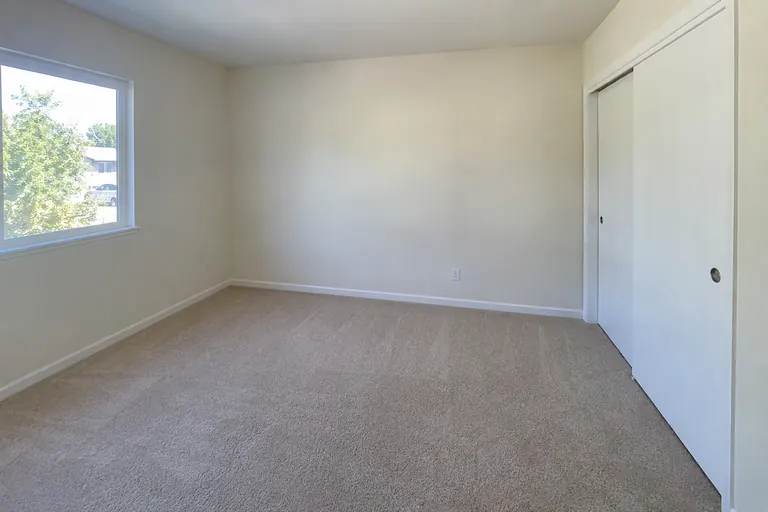
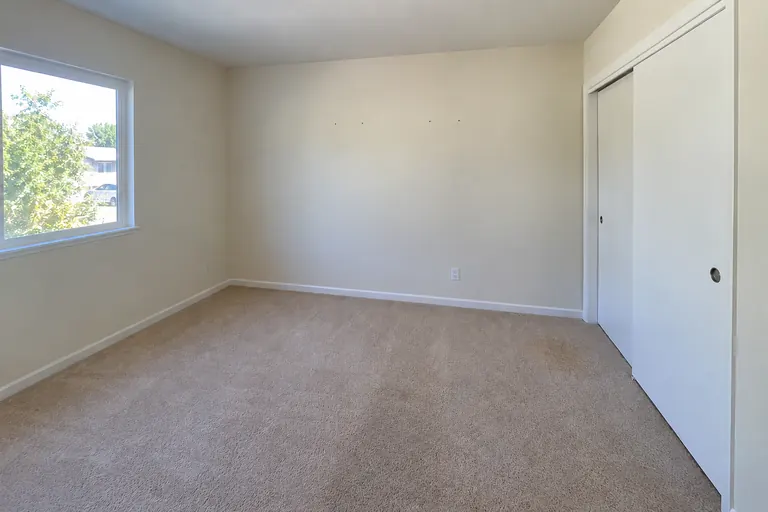
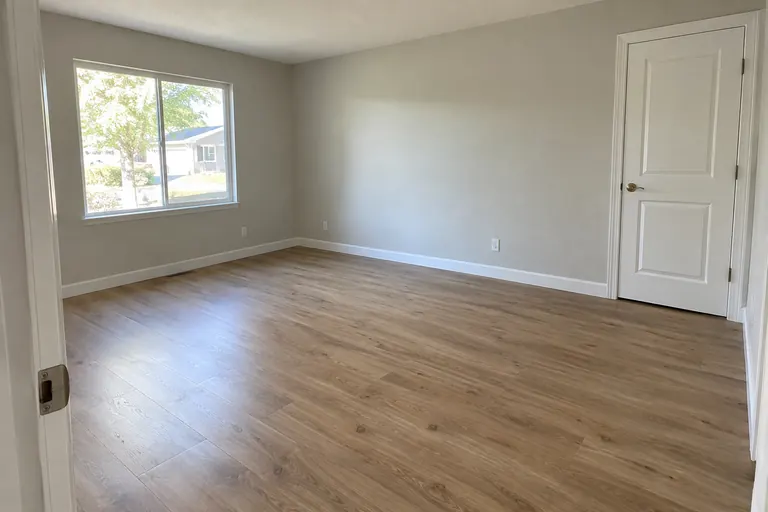
A single move-out photo shows a condition. The pair, the same subject at move-in and move-out with both dates, shows a change, which is what the categories are really about. The examples below are illustrations, each labelled with how an operator might commonly classify it.
 MI · Jul 12, 2024
 MO · Sep 30, 2026
 MI · Jul 12, 2024
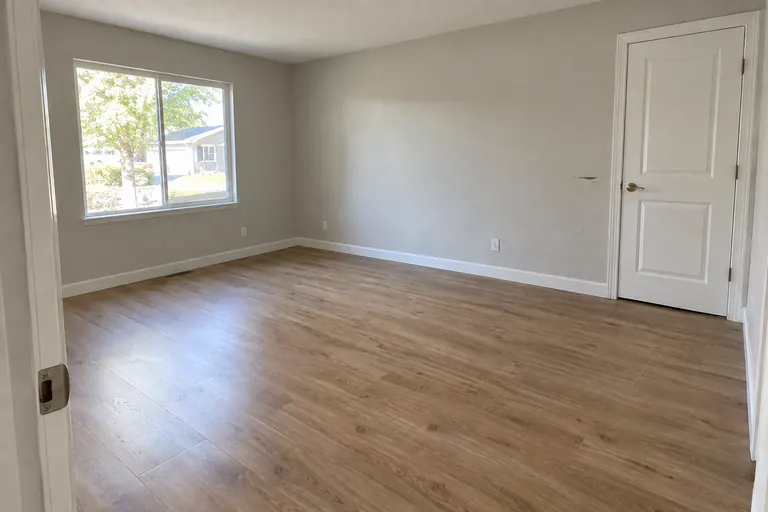 MO · Sep 30, 2026MI · Jul 12, 2024MO · Sep 30, 2026
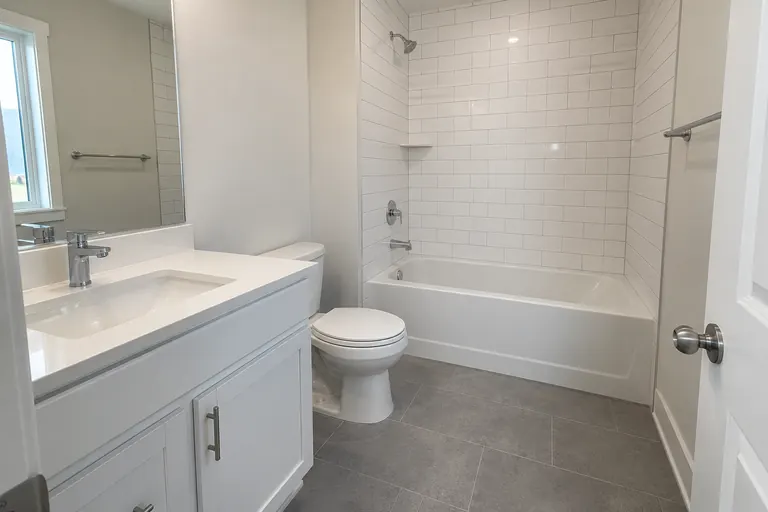 MI · Jul 12, 2024
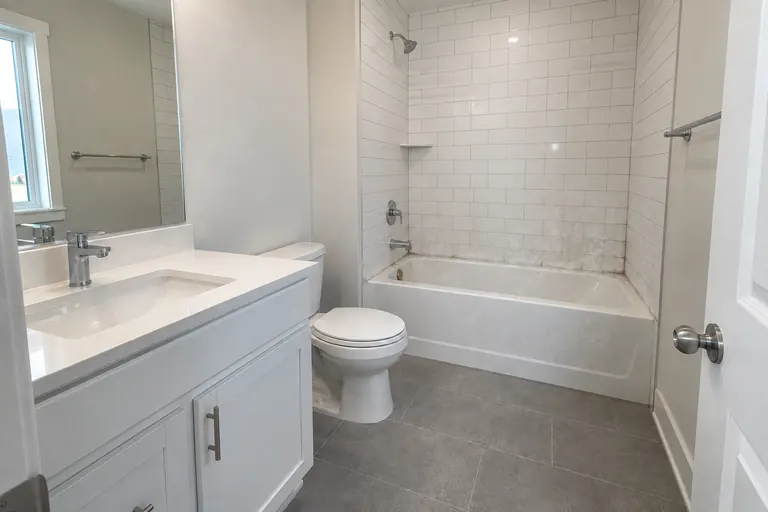 MO · Sep 30, 2026
Illustrative photos, generated for this guide; not a real property or tenancy.
How do age and useful life factor in?
Age changes what ordinary use looks like. A carpet near the end of its life shows more wear than a new one under the same household, and reviewers often weigh how old an item was and how long it would normally last. Some agencies and industry groups publish useful-life tables; if you rely on one, cite it in your records.
- Record installation or replacement dates for flooring, paint and appliances at move-in.
- Photograph existing wear at move-in so it is not mistaken for new damage later.
- Note the length of the tenancy on the move-out record.
How should you document a wear-or-damage call?
Whatever the call, the record should let someone who was not there follow it. For every item you treat as damage or cleaning, keep five things together:
- The move-in and move-out photos of the same subject, with both capture dates.
- Your classification: normal wear and tear, damage, cleaning, or other.
- A one-line note saying what changed and why you categorized it that way.
- The amount you entered, if any, and the estimate or invoice it came from.
- Who made the call and when.
The line becomes part of the itemized statement. See what a security deposit disposition contains.
Kitchen · counter burn, left of range
Line 2 of 5 · TEN-0418
MI-21 · Jul 12, 2024MO-29 · Sep 30, 2026Do this in ProFlow360
Classify each change beside its move-in photo
ProFlow360 puts every move-out photo next to its move-in match and records your classification, amount, documents and name on the line. It does not classify findings for you.
Burn mark on counter, left of range
Questions about normal wear and tear
What is considered normal wear and tear in a rental?
Normal wear and tear is the deterioration that comes from ordinary, everyday use over time: traffic wear on carpet, light scuffs, faded paint, loose handles. The exact meaning is set by your state statute and case law, so check the law where the property is located.
Are nail holes normal wear and tear?
A few small holes from hanging pictures are commonly treated as normal wear and tear. Many large anchor holes or damaged drywall are more often treated as damage. Photograph them at move-in and move-out either way, and check your state rules and lease.
Is cleaning the same as normal wear and tear?
No. Cleaning is usually treated as its own category: soil or residue left behind that ordinary cleaning removes. California, for example, describes cleaning back to the level of cleanliness at move-in. Record cleaning items separately from damage.
Does the age of an item matter?
Usually, yes. A ten-year-old carpet shows more wear than a new one under the same use, and reviewers often consider age and expected useful life. Record installation or replacement dates at move-in so the age is documented, not estimated later.
Who decides whether something is wear and tear or damage?
The landlord or property manager makes the initial call and should be ready to explain it. If the resident disagrees, the dispute is resolved under state law. Documentation software can record and organize the call, but it cannot make it for you.
Sources
Start documenting condition properly
Create an account and run your next inspection with the evidence trail already in place. No card required to start.