State law · statute quotes
California security deposit laws for landlords and property managers
The words of California's security deposit statute on each topic, quoted verbatim with pinpoint citations and links to the official source. No summaries, no interpretation.
Reviewed by Mark Shvaya, licensed California real estate broker (DRE #02243502), who uses ProFlow360 in a rental portfolio Mark manages
Last reviewed
Quoted on this page
- Deposit limit
- Returning the deposit
- Itemized statement
- Inspections and condition reports
- Photographs
- Normal wear and tear
- Interest
- Wrongful withholding
Cal. Civ. Code § 1950.5
On this page
What this page covers
California's residential security deposit provisions quoted here come from Cal. Civ. Code § 1950.5. Below are the statute's own words on 7 topics, each with a pinpoint citation and a link to the official text. This page does not summarize or interpret the law.
What does California law say about move-in or move-out inspections?
(f) (1) Within a reasonable time after notification of either party’s intention to terminate the tenancy, ... the landlord shall notify the tenant in writing of the tenant’s option to request an initial inspection and of the tenant’s right to be present at the inspection. ... the landlord, or an agent of the landlord, shall, upon the request of the tenant, make an initial inspection
Statement after the pre-move-out (initial) inspection
(2) Based on the inspection, the landlord shall give the tenant an itemized statement specifying repairs or cleanings that are proposed to be the basis of any deductions from the security the landlord intends to make pursuant to paragraphs (1) to (4), inclusive, of subdivision (b). ... The statement shall be given to the tenant, if the tenant is present for the inspection, or shall be left inside the premises.
Deductions after a pre-move-out (initial) inspection
(4) Subject to paragraphs (5) and (6), if an initial inspection is conducted pursuant to this subdivision and, at the time of inspection, the premises do not contain tenant possessions that prevent the landlord from identifying repairs or cleanings due to the presence of those possessions, the landlord shall not use the security for deductions for repairs or cleanings that are not identified in the itemized statement described in paragraph (2).
What does California law say about photographs?
(g) (1) For tenancies that begin on or after July 1, 2025, the landlord shall take photographs of the unit immediately before, or at the inception of, the tenancy. (2) Beginning April 1, 2025, the landlord shall take photographs of the unit within a reasonable time after the possession of the unit is returned to the landlord, but prior to any repairs or cleanings ... and shall also take photographs ... after such repairs or cleanings are completed.
Providing photographs with the itemized statement
(D) If a deduction is made for repairs or cleanings allowed by this section, the landlord shall provide photographs taken pursuant to subdivision (g), along with a written explanation of the cost of the allowable repairs or cleanings, as described in subparagraphs (A) to (C), inclusive. The landlord may provide such photographs to the tenant by mail, email, computer flash drive, or by providing a link where the tenant may view the photographs online.
What does California law say about the amount of a security deposit?
(c) (1) Except as provided in paragraph (2), (3), or (5), a landlord shall not demand or receive security, however denominated, in an amount or value in excess of an amount equal to one month’s rent, in addition to any rent for the first month paid on or before initial occupancy. ... (6) This subdivision shall not apply to a security collected or demanded by the landlord before July 1, 2024.
Deposit amount for certain landlords
(5) (A) Notwithstanding paragraph (1), a landlord shall not demand or receive security, however denominated, in an amount or value in excess of an amount equal to two months’ rent, in addition to any rent for the first month paid on or before initial occupancy if the landlord meets both of the following requirements: (i) The landlord is a natural person or a limited liability company in which all members are natural persons.
"Nonrefundable" provisions
(n) A lease or rental agreement shall not contain a provision characterizing any security as “nonrefundable.”
What does California law say about returning the deposit?
(h) (1) No later than 21 calendar days after the tenant has vacated the premises, ... the landlord shall furnish the tenant, a copy of an itemized statement indicating the basis for, and the amount of, any security received and the disposition of the security, and shall return any remaining portion of the security to the tenant
What does California law say about an itemized statement of deductions?
(2) The landlord shall also include, along with and at the same time the itemized statement is sent, copies of documents showing charges incurred and deducted by the landlord to repair or clean the premises, as follows: (A) If the landlord or landlord’s employee did the work, the itemized statement shall reasonably describe the work performed. The itemized statement shall include the time spent and the reasonable hourly rate charged.
When repairs are not yet complete
(3) If a repair to be done by the landlord or the landlord’s employee cannot reasonably be completed within 21 calendar days after the tenant has vacated the premises, ... the landlord may deduct the amount of a good faith estimate of the charges that will be incurred and provide that estimate with the itemized statement.
When documents are not required
(4) The landlord need not comply with paragraph (2) or (3) if either of the following applies: (A) The deductions for repairs and cleaning together do not exceed one hundred twenty-five dollars ($125).
How does California law refer to normal wear and tear?
(2) (A) The landlord shall not assert a claim against the tenant or the security for damages to the premises or any defective conditions that preexisted the tenancy, for ordinary wear and tear or the effects thereof, whether the wear and tear preexisted the tenancy or occurred during the tenancy, or for the cumulative effects of ordinary wear and tear occurring during any one or more tenancies.
What does California law say about wrongful withholding?
(m) The bad faith claim or retention by a landlord or the landlord’s successors in interest of the security or any portion thereof in violation of this section, or the bad faith demand of replacement of security in violation of subdivision (k), may subject the landlord or the landlord’s successors in interest to statutory damages of up to twice the amount of the security, in addition to actual damages.
Not quoted on this page
interest. That does not mean California law is silent on them; other sections or local rules may apply. Read the full statute.
Has California's security deposit law changed recently?
The official source carries this history note for the current text:
(Amended by Stats. 2025, Ch. 340, Sec. 1. (AB 414) Effective January 1, 2026.)
Amendment history not confirmed from the official source.
How does ProFlow360 help you document a California tenancy?
ProFlow360 records and organizes inspection evidence; it does not tell you what the statute requires or allows. What it records, for any state:
- Move-in, routine, pre-move-out and move-out inspections with photos timestamped at capture.
- Each move-out photo beside its move-in match, filed under the tenancy.
- Itemized lines with your classification, the amount you entered, and the estimate or invoice attached.
- An issued record that is sealed, shared by a link that expires and can be revoked.
Do this in ProFlow360
Keep the photos, the call and the invoice on the same line
Every deduction line carries the move-in and move-out photos, your classification and its documents, so the record can be followed by someone who was not there.
Kitchen · counter burn, left of range
Line 2 of 5 · TEN-0418
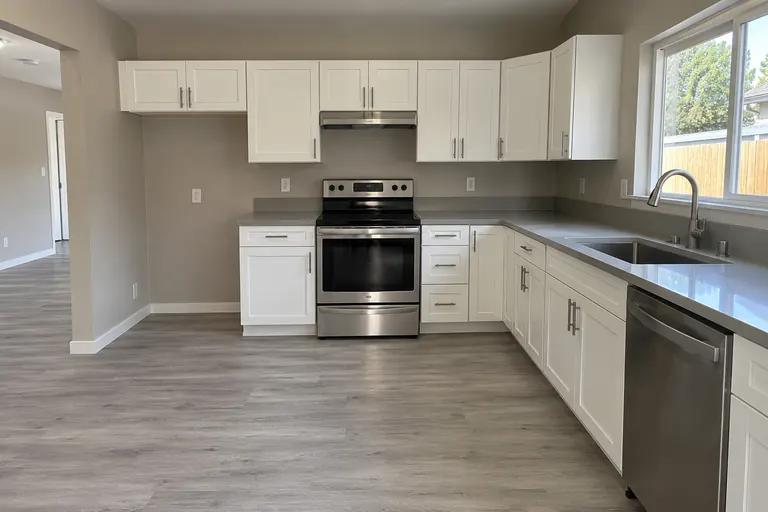 MI-21 · Jul 12, 2024
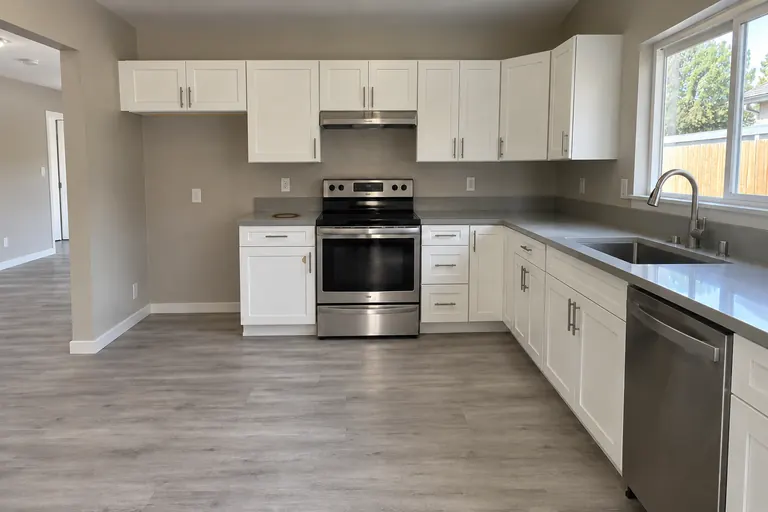 MO-29 · Sep 30, 2026
Security deposit statutes in nearby states
Sources
Sources checked October 16, 2026.
Start documenting condition properly
Create an account and run your next inspection with the evidence trail already in place. No card required to start.